
Dog Nutrition in Boise, Idaho: How to Keep Your Dog Healthy and Happy
Dog nutrition in Boise, Idaho is one of the most important factors for your dog’s overall health, behavior, and longevity. What you feed your dog directly impacts skin and coat quality, dental health, energy levels, and life expectancy. In fact, many chronic health issues—including allergies, joint problems, diabetes, digestive disorders, and even cancer—can often be traced back to diet and obesity.
Proper dog nutrition in Boise, Idaho isn’t just about feeding your dog; it’s about creating a balanced diet that supports physical health and behavior.
How Diet Affects Your Dog’s Training and Behavior
As a professional dog trainer, I’ve seen firsthand how diet impacts a dog’s ability to learn. Many dogs I train are overweight or on low-quality food, which often leads to low food drive, lethargy, and irritability.
I remember training a 4-year-old German Shepherd who was dog-reactive on leash and had unreliable obedience. She was overweight and eating low-quality kibble. Initially, she resisted training and seemed unmotivated. After adjusting her diet and consulting with her veterinarian, we discovered underlying joint injuries worsened by obesity. Once her diet and weight were addressed, her behavior improved dramatically.
This example shows that proper dog nutrition in Boise, Idaho isn’t just about weight; it’s about overall health and quality of life.
Obesity in Dogs: A Growing Problem
Obesity is a serious health risk for dogs. In 2018, approximately 56% of American dogs were overweight—about 50 million dogs prone to illness, injury, and reduced lifespan. Medical expenses related to obesity can average $2,000 per year per dog.
A healthy, spoiled dog isn’t overweight. A truly happy dog is balanced—getting proper exercise, training, and high-quality nutrition.
4 Ways to Maintain a Healthy Weight Through Dog Nutrition in Boise, Idaho
-
Add fresh foods at least three times per week, including fruits, vegetables, and whole proteins.
-
Adjust daily food intake based on your dog’s activity level—lighter meals on low-activity days, higher-calorie meals on active days.
-
Use meals for training instead of treats. For higher-value training food, use dehydrated raw food and subtract it from the dinner portion.
-
Follow proper serving sizes based on your dog’s ideal weight, not current weight. Calculate calories per cup for accuracy.
Types of Dog Food: From Highest Quality to Convenient Options
When it comes to dog nutrition in Boise, Idaho, higher-quality diets mirror human diets: less processed, more raw and fresh ingredients.
-
Raw diet: Highest quality; unprocessed, full of natural nutrients. Can be commercial or homemade.
-
Fresh diet: Includes whole foods like eggs, vegetables, and lean proteins.
-
Kibble & canned food: Convenient but often processed; quality varies widely. Look for whole ingredients and avoid by-products.
Even if you feed kibble, incorporating fresh or raw foods boosts health, coat, energy, and immunity.
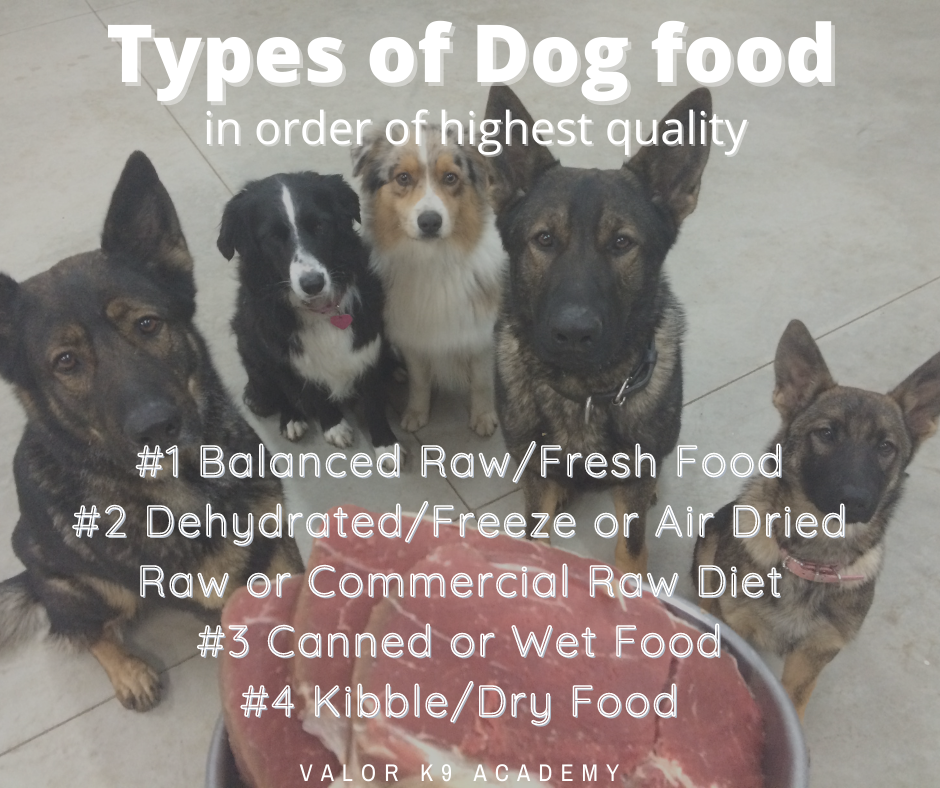
Types of Dog Food in order of highest quality featuring L to R: Duke, Zoey, Yedi, Havok, and Freya
How to Read Your Dog’s Food Bag
You can’t trust the front of the bag—terms like “holistic” or “all-natural” are marketing. Always check the ingredient panel and guaranteed analysis:
-
Protein: Should be the first, second, and third ingredient. Look for deboned meat, whole animal, or specific organ meat. Avoid non-specific meat meals and by-products.
-
Carbs: Ideally 40% or less of total diet. Use this formula:
100 - % protein - % fat - % moisture - % fiber - % ash = % carbs -
Salt Divide: Ingredients after salt contribute less than 1% of total weight.
Understanding ingredients ensures you provide the best dog nutrition in Boise, Idaho.
Affordable Ways to Boost Your Dog’s Diet
Even on a budget, you can improve your dog’s nutrition:
-
Add vegetables or fruits (blended or cooked) like leafy greens, carrots, pumpkin, blueberries, or green beans.
-
Rotate proteins to prevent intolerance and provide varied amino acids.
-
Include dehydrated raw or bone broth as toppers or meals.
-
Add supplements such as probiotics, multivitamins, and joint support.
-
Focus on gut health with prebiotics like pumpkin, kefir, or non-fat Greek yogurt.
Conclusion: Prioritize Dog Nutrition in Boise, Idaho
Proper dog nutrition in Boise, Idaho isn’t a luxury—it’s a necessity. A balanced diet supports healthy weight, boosts energy, prevents chronic disease, and enhances behavior. By feeding high-quality, fresh foods, monitoring portions, and understanding your dog’s dietary needs, you can ensure your dog lives a long, happy, and healthy life.
Written by Amy Pishner
About the Author:
Amy Pishner is the Founder of Valor K9 Academy, a veteran-owned dog training company in Boise, Idaho. With over a decade of experience training thousands of dogs, Amy specializes in balanced dog training that builds trust, obedience, and lasting results.