
🥩 How to Start Feeding Raw Dog Food in Boise, Idaho: A Simple Guide by Amy Pishner
“Switching to raw changed my dogs’ lives—shinier coats, better digestion, and calmer energy. I followed Amy Pishner’s blog to start raw dog food in Boise, Idaho, and it made the transition smooth and stress-free!”
— Melissa T., Eagle, ID
If you’ve been considering feeding your dog a raw diet, you’re not alone. Many dog owners in Boise, Idaho are making the switch to raw dog food to improve their pets’ health, energy, and longevity. I’m Amy Pishner, founder of Valor K9 Academy, and I want to show you how easy it can be to feed your dog raw—even on a budget.
 What Is a Raw Diet for Dogs?
A raw dog food diet mimics what dogs naturally eat in the wild: fresh meat, bones, organs, and plant-based nutrients. It’s free from the synthetic additives and extreme processing found in kibble.
Benefits of raw feeding include:
- Improved digestion and stool quality
- Healthier skin and shinier coat
- Fewer allergies and vet visits
- Better muscle tone and energy
Learn more about the difference between raw and kibble.
 My 70/10/10/10 + V/S Formula
Instead of the basic 80/10/10 model, I use a modified version that includes vegetables and supplements:
- 70% muscle meat
- 10% bone
- 10% organ
- 10% vegetables/fruits
- + Vitamins & Supplements
This approach keeps my dogs healthy and balanced—and you don’t need to be a canine nutritionist to do it.
 Where I Source My Raw Ingredients in Boise
Most of my dogs’ food comes from:
- Local grocery stores and butchers
- Leftover meat from hunting trips
- Sales and clearance finds (I aim for $2/lb or less)
Proteins I use:
- Beef, chicken, fish (like canned mackerel), pork
- Wild game like elk and deer (from our Idaho hunts)
 Pro Tip: Always feed raw bones—never cooked.
The Power of Organs
Organs like liver, pancreas, and heart are nutrient-packed. I use:
- Beef/chicken liver (easy to find locally)
- Freeze-dried organ supplements for variety
- Small amounts (too much can overwhelm the system)
 What About Veggies & Fruit?
I mix in produce to round out nutrients:
- Carrots, green beans, spinach, pumpkin
- Blueberries, bananas, cooked sweet potatoes
- Garlic (in moderation)
I sometimes cook them in broth or use veggie pulp from juicing. Dogs enjoy it more when it’s lightly cooked!
 My Must-Have Raw Supplements
Not every meal is perfectly balanced—so I supplement 2–3 times/week:
- NuVet Labs Immunity + Joint Support (Use referral code 45459)
- Salmon oil or krill oil
- Collagen
- Kefir, goat’s milk, and Greek yogurt
- Green-lipped mussels and beet powder
- CBD oil for seniors and dogs with joint pain—I swear by CBD! See my CBD post.
 Curious about balance? Consider working with a canine nutritionist.
 How Often I Feed My Dogs
I feed once per day, always 2+ hours after activity. My dogs are calm and trained to wait until released to eat. This reduces bloat risk—especially in deep-chested breeds like Great Danes, Greyhounds, Rottweilers, and German Shepherds.
 Learn more about bloat (GDV) here.
 How I Balance Their Meals
I don’t weigh every meal. Instead, I balance over the course of the week. Annual blood work helps me adjust nutrient levels based on their needs (like more banana for low potassium).
For exact portions, use this helpful raw feeding calculator.
 Whole Prey Feeding (Yes, Even Feathers)
I feed whole chickens from our farm—roosters, hens, the works. Dogs instinctively eat what they need first (usually organs and brains). Puppies love the feathers adults leave behind!
Internal Links
 More Resources for Raw Dog Food Boise Idaho
 Canine Nutrigenomics – A must-read on the science of food and gene expression
- Raw Feeding University – Facebook Group
- NuVet Labs Website
Final Thoughts
Feeding raw dog food in Boise, Idaho doesn’t have to be complicated or expensive. Start small. Be consistent. And don’t overthink it.
You don’t need a Ph.D.—you just need the desire to feed better. Your dog’s body will thank you.
Amy Pishner
Owner & Head Trainer, Valor K9 Academy
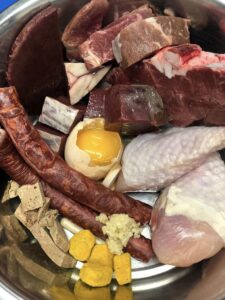
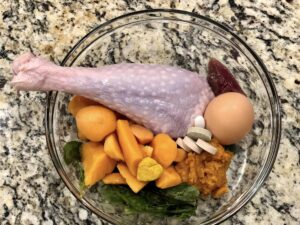
Example meals for my dogs—this is molecular-level health!